
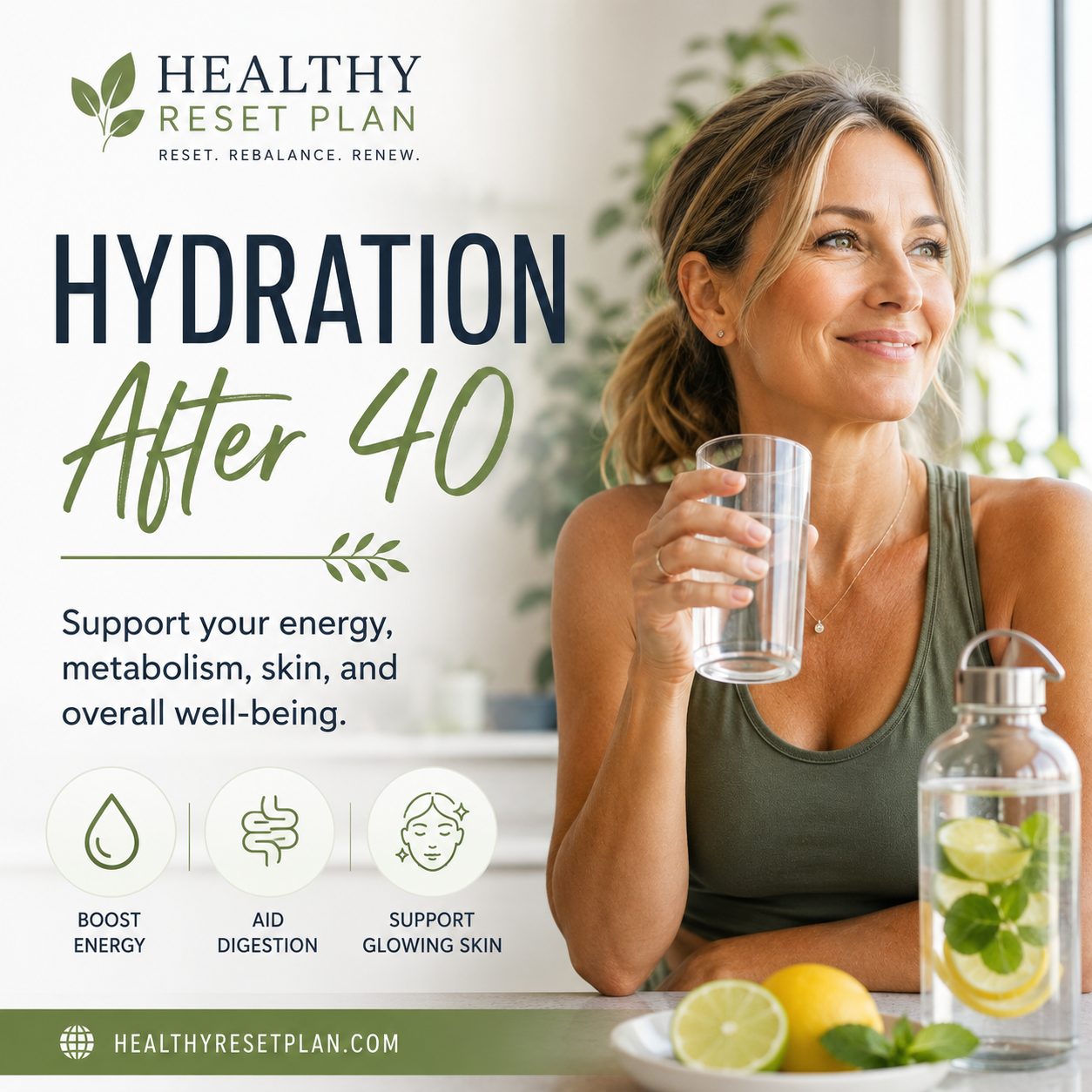
Hydration After 40: A Complete Guide to Drinking More Water for Better Health
Learn how to stay properly hydrated after age 40 with simple daily habits, water-rich foods, electrolyte guidance, and practical tips that support energy, metabolism, digestion, joint health, brain function, and healthy aging. Build a sustainable hydration routine that fits your lifestyle instead of following a one-size-fits-all water rule.
Quick Summary
Staying hydrated after age 40 is about more than simply drinking more water. Proper hydration supports energy levels, metabolism, digestion, brain function, joint health, muscle performance, healthy skin, and overall well-being. This guide explains how much water you may need, which foods contribute to hydration, when electrolyte drinks may be helpful, common hydration mistakes to avoid, and simple daily habits that make staying hydrated easier. You’ll also find comparison tables, practical checklists, and a step-by-step action plan to help you build a healthy hydration routine that lasts.
Key Takeaways
- Hydration needs often change after age 40 due to normal changes in body composition, activity level, medications, and overall health.
- Drinking water consistently throughout the day is usually more effective than trying to drink large amounts all at once.
- Water-rich foods like fruits, vegetables, soups, and yogurt can make a meaningful contribution to your daily fluid intake.
- Exercise, hot weather, illness, and excessive sweating can increase your hydration needs, and electrolyte replacement may be helpful in some situations.
- Watch for early signs of dehydration such as thirst, dark urine, dry mouth, headaches, fatigue, dizziness, or reduced physical performance.
- If you have kidney disease, heart failure, or other medical conditions that affect fluid intake, follow the advice of your healthcare provider before changing your hydration routine.
Featured Comparison: Factors That Affect Your Hydration Needs After 40
| Factor | How It Affects Hydration | What You Can Do |
|---|---|---|
| Age | The body’s thirst response often becomes less noticeable with age, making dehydration easier to overlook. | Drink water regularly throughout the day instead of waiting until you feel thirsty. |
| Physical Activity | Exercise increases fluid loss through sweat and faster breathing. | Drink before, during, and after physical activity to replace lost fluids. |
| Hot or Humid Weather | Higher temperatures increase sweating and fluid loss. | Carry a reusable water bottle and increase water intake when spending time outdoors. |
| Water-Rich Foods | Fruits, vegetables, soups, and yogurt contribute to daily hydration. | Include hydrating foods with meals and snacks every day. |
| Caffeine | Moderate coffee and tea intake usually contributes to hydration for most healthy adults. | Enjoy caffeinated beverages in moderation while continuing to drink water. |
| Alcohol | Alcohol can increase fluid loss and may contribute to dehydration. | Drink water before, during, and after consuming alcoholic beverages. |
| Medications | Some medications may increase urination or affect the body’s fluid balance. | Follow your healthcare provider’s guidance regarding hydration. |
| Health Conditions | Kidney disease, heart failure, diabetes, and other medical conditions can change fluid needs. | Always follow individualized medical advice for fluid intake. |
| Illness | Fever, vomiting, and diarrhea can rapidly increase fluid losses. | Replace fluids promptly and seek medical care when symptoms are severe or persistent. |
Table of Contents
- Why Hydration Matters After Age 40
- How Much Water Should You Drink After 40?
- Foods That Help You Stay Hydrated
- Simple Daily Hydration Habits That Work
- How to Replace Sugary Drinks with Healthier Choices
- Hydration Tips for Walking, Exercise, and Fitness
- Staying Hydrated in Hot Weather and During Outdoor Activities
- Common Hydration Mistakes to Avoid
- Easy Ways to Drink More Water Every Day
- 7-Day Hydration Challenge for Adults Over 40
- Signs and Symptoms of Dehydration
- Medical Conditions That Affect Hydration
- Frequently Asked Questions
A Practical Approach to Hydration After 40
Building better hydration habits after age 40 doesn’t require complicated rules or drinking excessive amounts of water. The most successful approach is to develop simple, sustainable habits that fit naturally into your daily routine. Drinking water consistently, eating water-rich foods, paying attention to thirst and urine color, and adjusting your fluid intake for exercise, hot weather, and illness can help support energy, digestion, brain function, joint health, and overall wellness.
Rather than aiming for a single number that works for everyone, think of hydration as an ongoing daily habit. Your fluid needs can change based on your activity level, body size, medications, climate, and overall health. Small improvements practiced consistently are usually easier to maintain and provide greater long-term benefits than trying to follow an unrealistic hydration goal.
Important Starting Point
Healthy Reset Plan provides general educational information and is not a substitute for professional medical advice, diagnosis, or treatment.
Before making significant changes to your hydration habits, diet, or exercise routine, consult a qualified healthcare professional if you have kidney disease, heart disease, diabetes, high blood pressure, or another chronic medical condition. You should also seek medical guidance if you take medications that affect fluid balance, are pregnant or breastfeeding, have mobility limitations, have a history of disordered eating, or experience persistent symptoms such as dizziness, confusion, severe dehydration, or fainting.
Every person’s hydration needs are different. The information in this guide is designed to help healthy adults over 40 build practical hydration habits and should be used alongside personalized medical advice when appropriate.
Why Hydration Matters After 40
Staying properly hydrated becomes increasingly important after age 40 because water is involved in nearly every function of the body. Fluids help regulate body temperature, transport nutrients, support healthy circulation, lubricate joints, aid digestion, remove waste, and keep the brain and muscles functioning normally. Even mild dehydration can contribute to fatigue, headaches, difficulty concentrating, constipation, dizziness, and reduced physical performance.
As we get older, the body’s thirst response may become less noticeable, making it easier to become dehydrated without realizing it. Changes in body composition, medications, activity level, and certain health conditions can also affect how much fluid you need each day. This is why developing consistent hydration habits is often more effective than relying on thirst alone.
Proper hydration also supports healthy exercise, recovery, metabolism, and overall well-being. Whether your goal is improving energy, maintaining a healthy weight, walking more, or simply feeling your best, drinking enough water throughout the day provides a strong foundation for long-term health.
Put This Into Practice
Think about your normal daily routine instead of your ideal routine. Choose one small hydration habit that you can repeat every day, even when life gets busy. For example, drink a glass of water after brushing your teeth, keep a reusable water bottle at your desk, or drink water before each meal. Small habits that happen consistently are much easier to maintain than trying to make dramatic changes overnight.
Review Without Judgment
At the end of each week, ask yourself a few simple questions:
- Did I drink water consistently throughout the day?
- What situations made staying hydrated easier?
- What caused me to forget or delay drinking water?
- What small change could make next week easier?
Focus on learning rather than perfection. Hydration after 40 is built through consistent daily habits, not occasional perfect days. Small improvements repeated over weeks and months usually produce better long-term results than short periods of extreme effort.
There Is No Perfect Universal Water Number
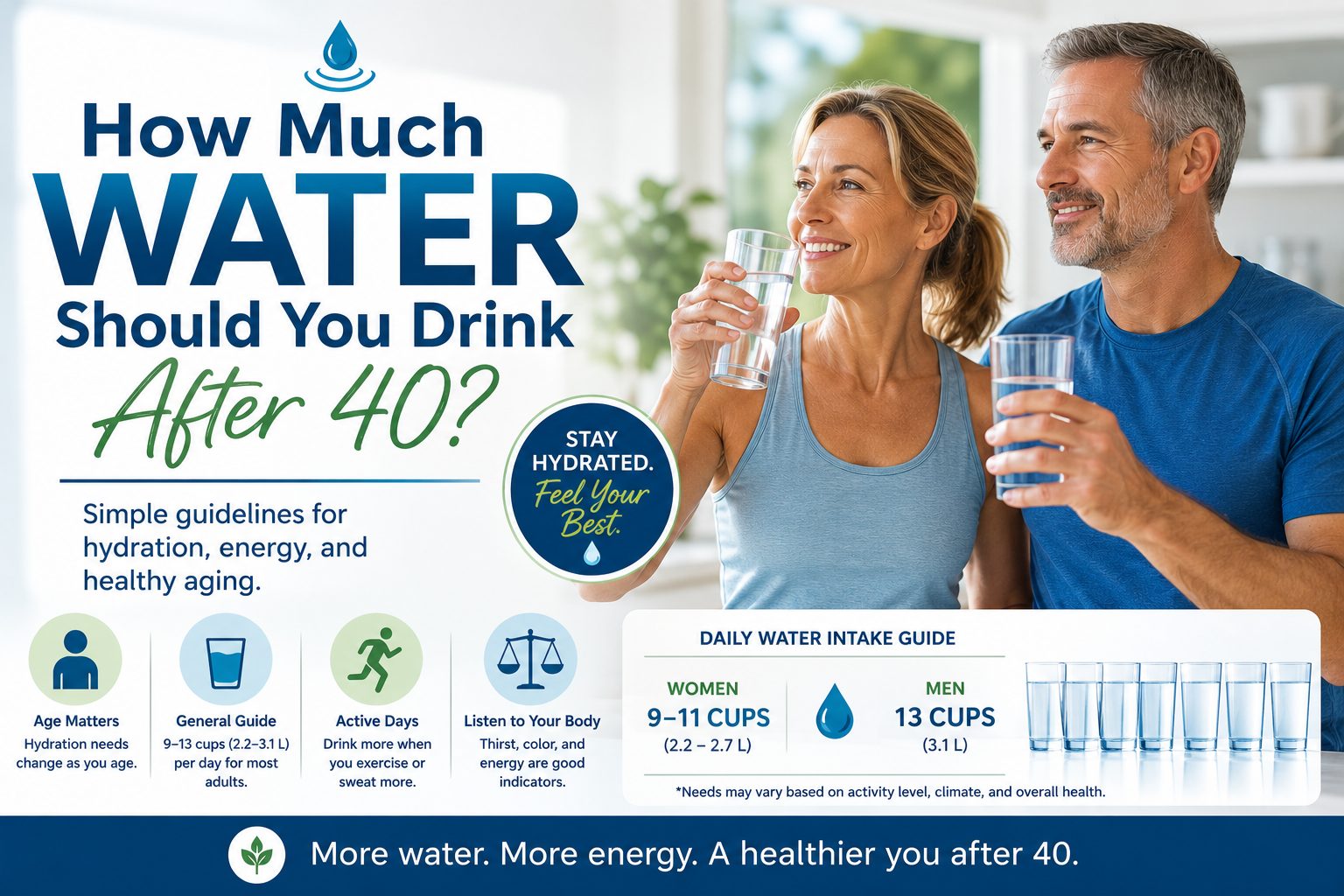
One of the most common questions people ask is, “How much water should I drink each day?” The truth is that there isn’t one number that is right for everyone. Your daily fluid needs depend on many factors, including your age, body size, activity level, climate, overall health, diet, medications, and whether you are pregnant or breastfeeding.
Many healthy adults can use thirst, urine color, and their daily routine as practical guides instead of trying to reach an exact number of ounces every day. On days when you exercise, spend time outdoors in hot weather, or lose fluids through sweating, fever, vomiting, or diarrhea, your body will generally need more fluids than on a quiet day spent indoors.
It’s also important to remember that water isn’t your only source of hydration. Milk, unsweetened tea, coffee in moderation, soups, fruits, and vegetables all contribute to your daily fluid intake. Rather than chasing a specific number, focus on drinking fluids consistently throughout the day and adjusting your intake based on your body’s needs.
Factors That Affect Daily Fluid Needs
| Factor | How It Changes Your Fluid Needs |
|---|---|
| Body Size | Larger bodies generally require more fluids than smaller bodies. |
| Exercise | Physical activity increases fluid loss through sweat. |
| Hot Weather | Heat and humidity increase sweating and water needs. |
| Illness | Fever, vomiting, and diarrhea can rapidly increase fluid loss. |
| Diet | Water-rich foods contribute to daily hydration. |
| Medications | Some medications affect fluid balance or increase urination. |
| Medical Conditions | Conditions such as kidney disease or heart failure may require individualized fluid guidance. |
Put This Into Practice
Instead of aiming for the same amount of water every day, build a routine that can adjust to your schedule. Keep water nearby, drink with meals, and increase your fluid intake when you’re more active or the weather is hot. The best hydration plan is one you can maintain consistently.
Review Without Judgment
At the end of the week, ask yourself:
- Did I drink fluids consistently throughout the day?
- Did I drink more when I exercised or spent time outdoors?
- Did I notice signs that I needed more water?
- What simple habit would make staying hydrated easier next week?
Remember that hydration after 40 isn’t about reaching a perfect number every day. It’s about developing flexible, sustainable habits that support your health over the long term.
There Is No Perfect Universal Water Number
One of the most common questions people ask is, "How much water should I drink each day?" The truth is that there isn't one amount that is right for everyone. Your daily fluid needs depend on many factors, including your age, body size, activity level, climate, overall health, diet, medications, and whether you are pregnant or breastfeeding.
As we get older, hydration needs may change because body composition, activity levels, medications, and certain health conditions can all affect fluid balance. Instead of trying to reach a specific number of glasses or ounces every day, it is usually more helpful to build consistent hydration habits and adjust your fluid intake when your routine changes.
Many healthy adults can use thirst, urine color, and their daily routine as practical guides instead of focusing on a fixed amount of water. On days when you exercise, spend time outdoors in hot weather, or lose fluids through sweating, fever, vomiting, or diarrhea, your body will generally require more fluids than on a quiet day spent indoors.
Water is not your only source of hydration. Milk, unsweetened tea, coffee in moderation, soups, fruits, vegetables, and other water-rich foods all contribute to your daily fluid intake. Rather than chasing one perfect number, focus on drinking fluids consistently throughout the day while adjusting your intake based on your body's needs.
Factors That Affect Daily Fluid Needs
| Factor | How It Changes Your Fluid Needs |
|---|---|
| Body Size | Larger bodies generally require more fluids than smaller bodies. |
| Physical Activity | Walking, exercise, yard work, and other physical activities increase fluid loss through sweat. |
| Hot or Humid Weather | Heat increases sweating, making additional hydration important. |
| Cold Weather | People often drink less water during colder months even though hydration remains important. |
| Illness | Fever, vomiting, diarrhea, and infections can significantly increase fluid loss. |
| Diet | Water-rich foods like fruits, vegetables, soups, and yogurt contribute to hydration. |
| Medications | Some medications increase urination or affect the body's fluid balance. |
| Pregnancy & Breastfeeding | Fluid requirements are often higher during pregnancy and while nursing. |
| Medical Conditions | Kidney disease, heart failure, diabetes, and other conditions may require individualized fluid recommendations. |
General Factors That Influence Daily Hydration
| Situation | Practical Hydration Advice |
|---|---|
| Typical Day Indoors | Drink fluids consistently throughout the day instead of waiting until you become very thirsty. |
| Walking or Exercise | Drink before, during, and after activity to replace fluids lost through sweat. |
| Working Outside | Increase water intake during hot weather and take regular hydration breaks. |
| Travel | Carry a reusable water bottle to make drinking water more convenient. |
| Eating High-Fiber Foods | Fiber works best when paired with adequate fluid intake. |
| Recovering From Illness | Replace lost fluids gradually and follow medical advice when appropriate. |
Signs You May Need More Fluids
- Feeling thirsty
- Dark yellow urine
- Dry mouth or dry lips
- Headache
- Fatigue or low energy
- Dizziness when standing
- Difficulty concentrating
- Reduced exercise performance
Put This Into Practice
Instead of trying to drink the exact same amount every day, create a hydration routine that adapts to your lifestyle. Keep a water bottle nearby, drink a glass of water with each meal, and increase your fluid intake whenever you exercise, spend time outdoors, or notice early signs of dehydration.
Choose one simple hydration habit that is easy to repeat every day. Small, consistent actions are far more effective than trying to dramatically increase your water intake for only a few days.
Review Without Judgment
At the end of the week, ask yourself:
- Did I drink fluids consistently throughout the day?
- Did I drink more when I exercised or spent time outside?
- Did I notice signs that I needed additional fluids?
- Did I include water-rich foods with my meals?
- What one change would make staying hydrated easier next week?
Remember that staying hydrated after age 40 isn't about reaching a perfect number of glasses or ounces every day. Instead, focus on building flexible, sustainable hydration habits that match your activity level, climate, diet, and overall health. Consistency over time is far more important than hitting an exact daily target.
Water Comes From Drinks and Food
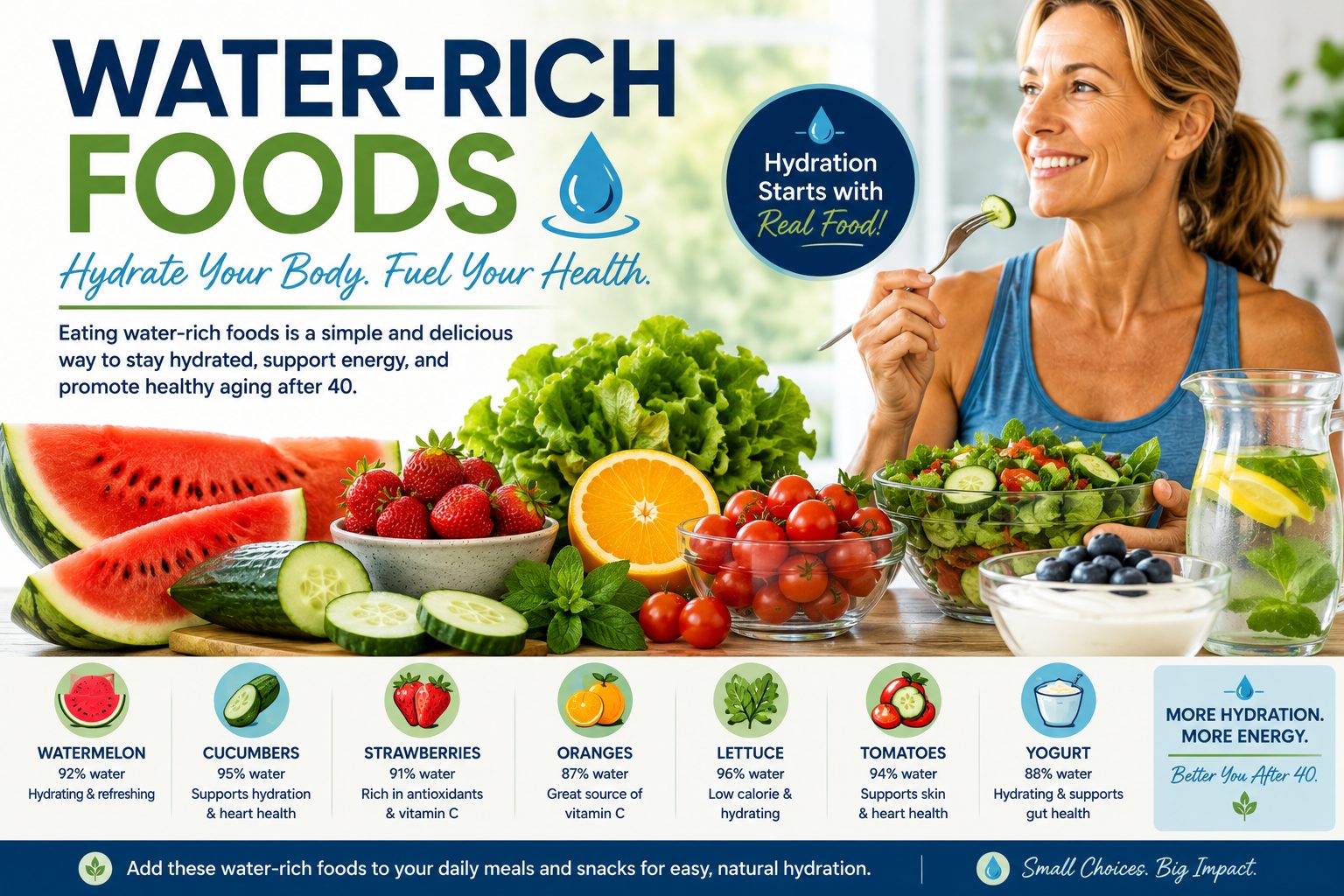
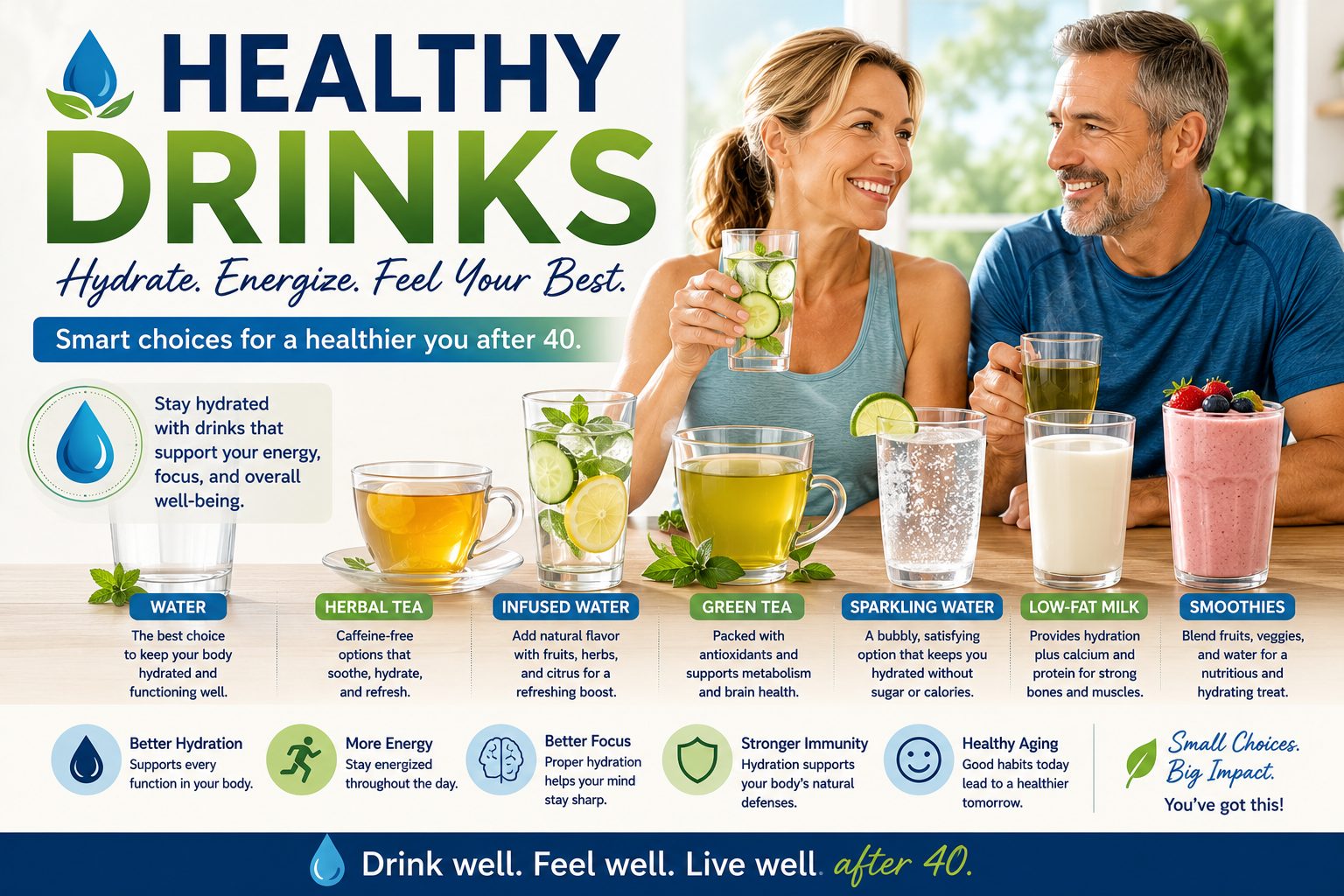
Many people assume that only plain water counts toward hydration, but that’s not the case. Your body receives fluids from a variety of beverages and water-rich foods throughout the day. While drinking water is an excellent habit, foods and other beverages can also help you meet your daily hydration needs.
Milk, unsweetened tea, coffee in moderation, soups, broth-based meals, fruits, vegetables, and yogurt all contain water that contributes to hydration. Choosing a variety of hydrating foods can make it easier to stay properly hydrated without feeling like you have to drink large amounts of water all at once.
Water-rich foods also provide important vitamins, minerals, antioxidants, and fiber that support overall health. This makes fruits and vegetables an excellent choice for both nutrition and hydration, especially for adults over 40.
Foods and Drinks That Help Keep You Hydrated
| Food or Drink | Hydration Benefit |
|---|---|
| Water | Calorie-free and the simplest way to stay hydrated. |
| Milk | Provides fluid along with protein, calcium, and several essential nutrients. |
| Unsweetened Tea | Contributes to hydration while providing naturally occurring plant compounds. |
| Coffee (in moderation) | Can contribute to daily fluid intake for most healthy adults. |
| Soups and Broths | Contain significant amounts of fluid and can be especially helpful during colder months. |
| Watermelon | Contains a high percentage of water and is naturally refreshing. |
| Cucumber | One of the most water-rich vegetables and easy to include with meals. |
| Strawberries | Provide water, fiber, and vitamin C. |
| Oranges | Contain water along with vitamin C and potassium. |
| Lettuce and Leafy Greens | Add water and nutrients to salads and sandwiches. |
| Yogurt | Provides fluid along with protein and calcium. |
Water-Rich Foods Worth Adding to Your Routine
- Watermelon
- Cantaloupe
- Strawberries
- Oranges
- Grapes
- Cucumber
- Celery
- Lettuce
- Tomatoes
- Zucchini
- Bell peppers
- Broccoli
What About Sugary Drinks?
Sugar-sweetened beverages can contribute fluids, but they may also add significant amounts of added sugar and calories. Water should usually be your primary beverage, while unsweetened tea, coffee in moderation, milk, and naturally water-rich foods can all support healthy hydration. If you regularly drink soda or sweetened beverages, replacing just one serving each day with water is a simple first step.
Put This Into Practice
Choose one meal each day and include at least one water-rich food such as fruit, vegetables, soup, or yogurt. Carry a reusable water bottle and keep healthy beverage choices within easy reach. Building small habits around meals often makes hydration feel automatic instead of something you have to remember.
Review Without Judgment
At the end of the week, ask yourself:
- Did I drink water regularly throughout the day?
- Did I include water-rich foods with my meals?
- Which healthy drinks did I enjoy the most?
- Was there a time of day when I consistently forgot to drink?
- What small adjustment would make hydration easier next week?
Hydration after 40 is about more than drinking water alone. A balanced combination of water, nutritious beverages, and water-rich foods can help support energy, digestion, healthy aging, and overall wellness while creating habits that are realistic enough to maintain for years.
Use Thirst and Routine Together
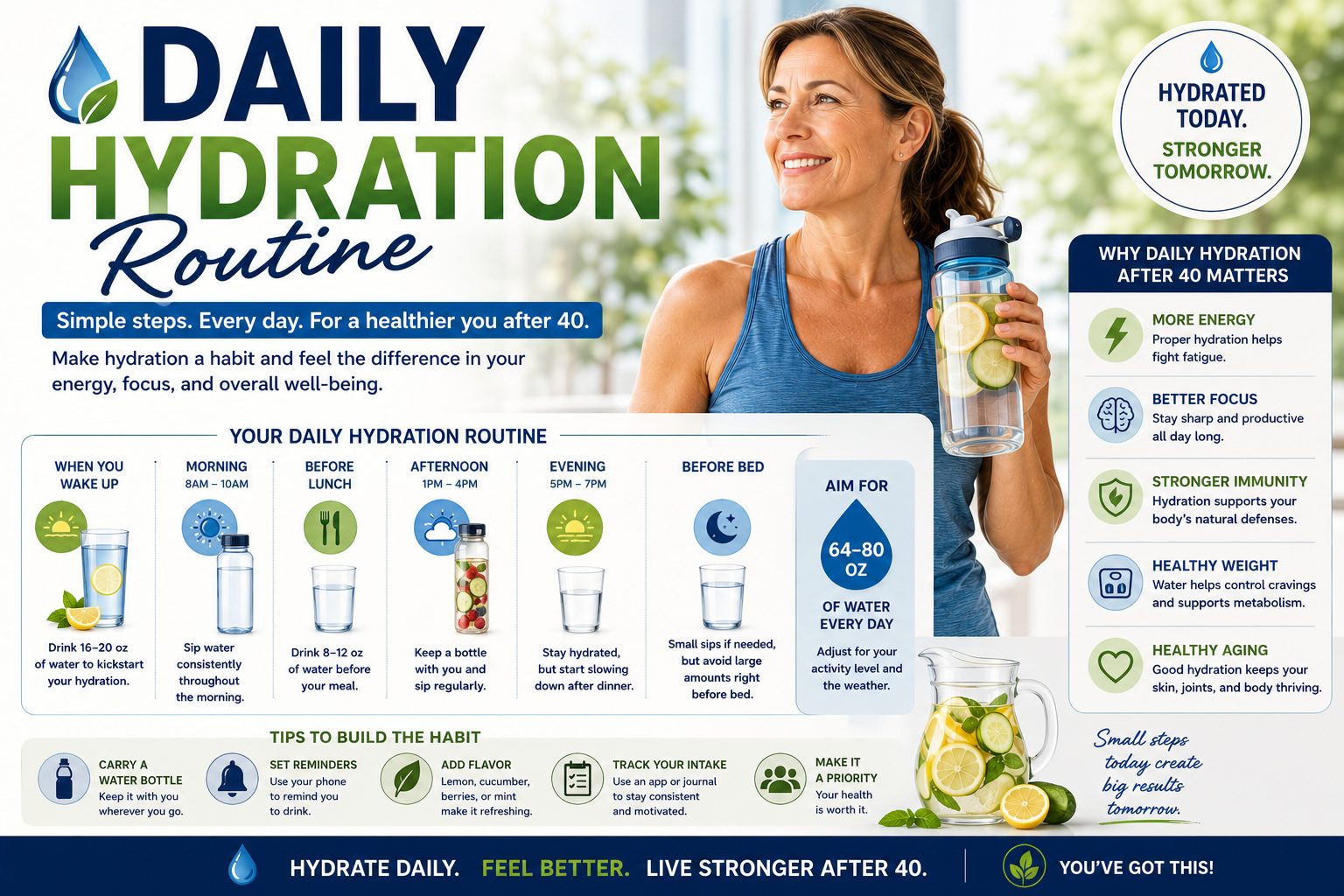
Thirst is one of your body’s natural signals that it’s time to drink fluids, but it isn’t always the earliest sign that you need water. For many adults over 40, relying only on thirst may not provide enough hydration during busy days, exercise, hot weather, travel, or illness. Building simple daily routines can help you stay consistently hydrated without constantly thinking about it.
Many people find it easier to drink enough water when it becomes part of an existing habit. For example, drinking a glass of water after waking up, with every meal, after exercise, or before leaving the house creates automatic reminders that are easier to maintain than relying on memory alone.
Your hydration needs may also change throughout the day. If you’re spending time outdoors, exercising, traveling, or working in warm temperatures, your body may need additional fluids even before you begin to feel thirsty. Paying attention to both your body’s signals and your daily routine provides a more flexible approach than depending on either one by itself.
Simple Daily Hydration Cues
| Daily Activity | Hydration Habit |
|---|---|
| Wake up in the morning | Drink one glass of water before coffee or breakfast. |
| Each meal | Keep a glass of water on the table and drink during the meal. |
| Exercise or walking | Drink before and after physical activity. |
| Leaving the house | Take a reusable water bottle with you. |
| Returning home | Drink a glass of water before starting your next activity. |
| Warm weather | Increase fluids and take regular water breaks outdoors. |
| Evening | Drink enough to stay hydrated without consuming so much that it repeatedly disrupts your sleep. |
Signs It’s Time to Drink More Fluids
- Feeling thirsty
- Dry mouth or lips
- Dark yellow urine
- Headache
- Low energy
- Dizziness
- Reduced concentration
- Heavy sweating during activity
Put This Into Practice
Choose one existing daily habit and connect your hydration routine to it. You might drink a glass of water after brushing your teeth, before every meal, after each walk, or whenever you refill your coffee cup. Habit stacking—pairing a new habit with one you already do every day—often makes healthy routines easier to maintain.
Start with the smallest action you can repeat consistently. One glass of water connected to an existing routine is far more sustainable than setting a goal that feels difficult to maintain.
Review Without Judgment
At the end of the week, ask yourself:
- Did my daily routine remind me to drink water?
- Which hydration cue worked best?
- When did I forget to drink?
- Did I increase fluids during exercise or hot weather?
- What one habit can I improve next week?
Hydration after 40 becomes much easier when drinking water is connected to routines you already follow every day. Instead of depending entirely on thirst or trying to remember throughout the day, build simple habits that naturally support healthy hydration over the long term.
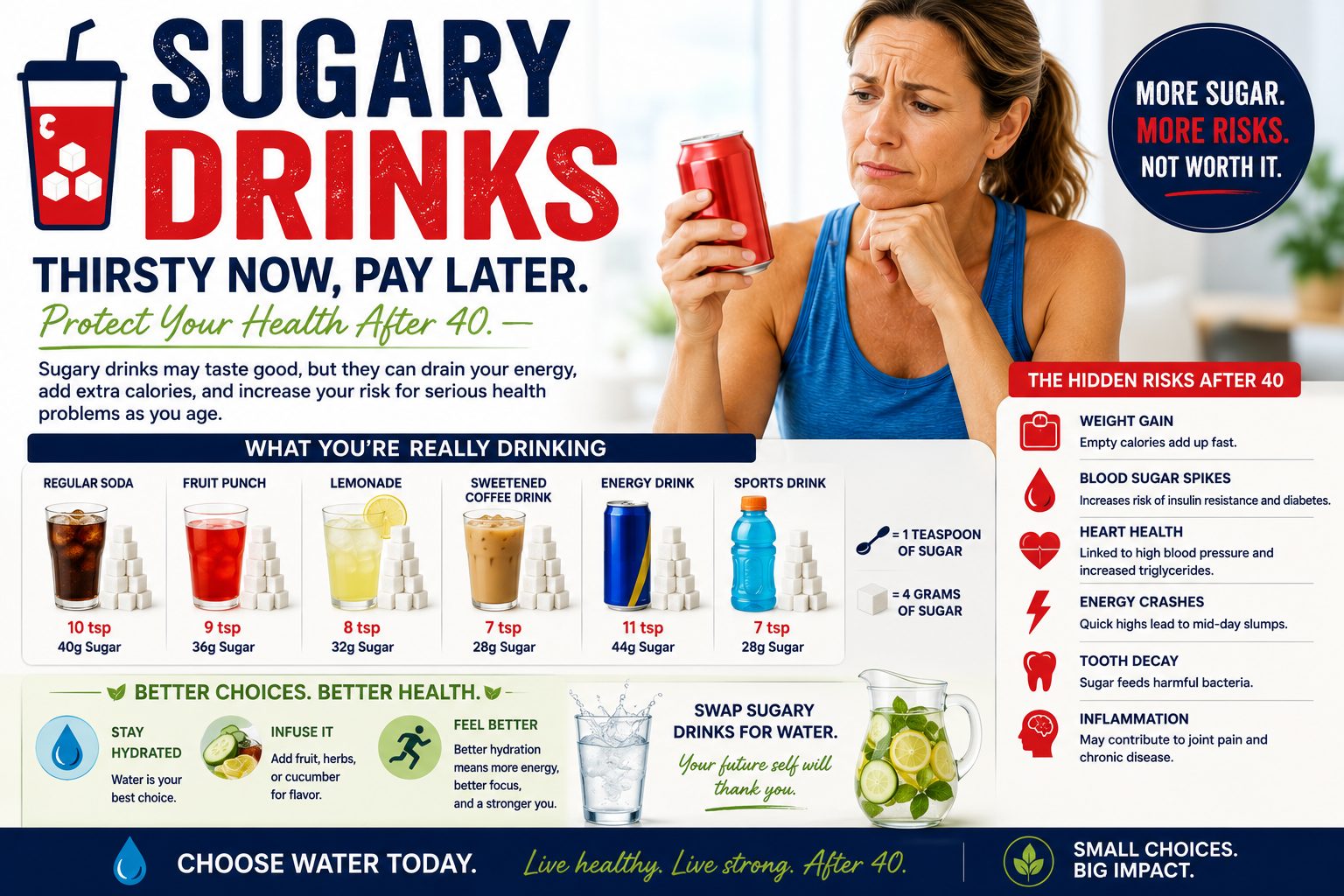
Replace Sugary Drinks Gradually
One of the simplest ways to improve your hydration and overall nutrition after age 40 is to gradually replace sugar-sweetened beverages with healthier options. Soft drinks, sweet tea, energy drinks, flavored coffee beverages, and many fruit drinks can add significant amounts of sugar and calories without providing lasting fullness.
You don’t have to eliminate every sugary drink overnight. For many people, replacing just one sweetened beverage each day with water, sparkling water, unsweetened tea, or another lower-sugar option is a realistic first step. Small, consistent changes are usually easier to maintain than making several major changes at once.
Over time, many people find that their taste preferences begin to change. As you become accustomed to drinking less sugar, plain water and naturally flavored beverages often become more enjoyable. This gradual approach supports long-term healthy habits without feeling restrictive.
Healthier Drink Choices
| Instead Of | Try This | Benefit |
|---|---|---|
| Regular Soda | Water with lemon or lime | Reduces added sugar while supporting hydration. |
| Sweet Tea | Unsweetened tea | Provides hydration without added sugar. |
| Energy Drinks | Water or sparkling water | Avoids excess sugar and unnecessary stimulants. |
| Sugary Sports Drinks | Water for most everyday activities | Hydrates without extra calories for typical daily exercise. |
| Sweetened Coffee Drinks | Coffee with less added sugar or plain coffee with milk | Gradually lowers sugar intake. |
| Fruit Punch | Whole fruit with water | Provides fiber along with hydration. |
Simple Ways to Drink More Water
- Carry a reusable water bottle throughout the day.
- Add lemon, lime, cucumber, or berries for natural flavor.
- Drink a glass of water before each meal.
- Keep cold water easily available at home and work.
- Replace one sugary drink each day instead of trying to eliminate them all at once.
- Choose sparkling water if you enjoy carbonated beverages.
Put This Into Practice
Choose one sugary drink that you consume regularly and replace it with water or another lower-sugar beverage three or four days this week. Once that feels comfortable, gradually increase the number of healthy substitutions. Building confidence through small successes often leads to lasting change.
Review Without Judgment
At the end of the week, ask yourself:
- How many sugary drinks did I replace?
- Which healthier drink did I enjoy the most?
- When was I most tempted to choose a sugary beverage?
- Did carrying water make healthy choices easier?
- What small improvement can I make next week?
Healthy hydration after 40 doesn’t require perfection. Replacing sugary drinks one step at a time can reduce added sugar, lower calorie intake, improve hydration, and create sustainable habits that support long-term health and healthy aging.
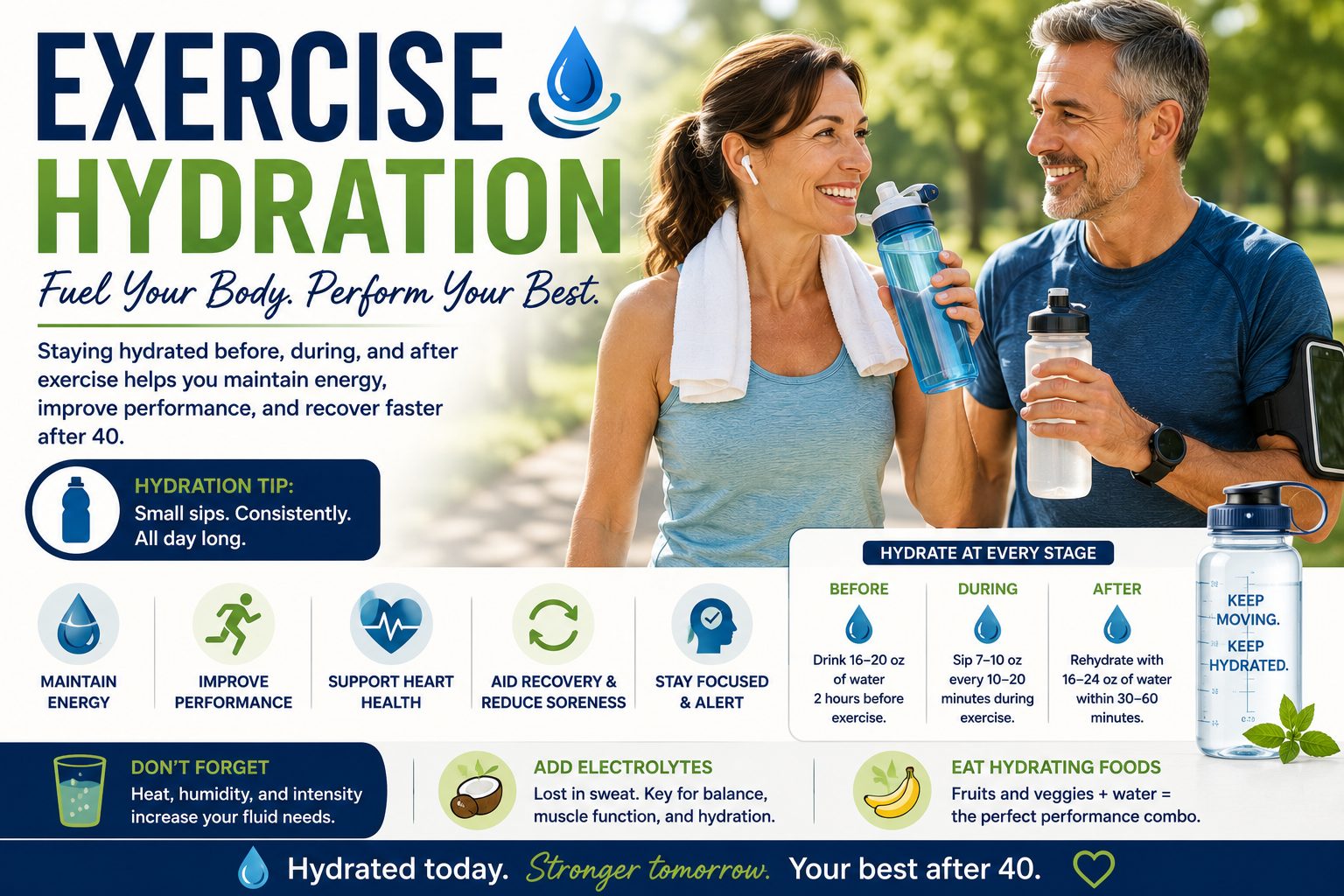
Hydration During Walking and Exercise
Walking, strength training, cycling, gardening, and other forms of physical activity increase your body’s need for fluids. The amount of water you need depends on several factors, including the duration and intensity of the activity, the weather, your body size, how much you sweat, and your overall health. Adults over 40 often benefit from making hydration part of their exercise routine instead of waiting until they feel very thirsty.
For most moderate workouts, drinking water before, during, and after exercise is enough to replace normal fluid losses. During longer periods of exercise, strenuous outdoor work, or activities performed in hot and humid weather, additional fluids—and in some cases electrolytes—may be helpful. Your healthcare provider or a qualified sports nutrition professional can provide individualized guidance if you participate in endurance events or have medical conditions that affect hydration.
It is also important to avoid drinking excessive amounts of water in a short period of time. Although uncommon, overhydration can occur when fluid intake greatly exceeds the body’s ability to eliminate water. A balanced approach that responds to thirst, activity level, weather conditions, and individual needs is generally the safest strategy.
Hydration Tips for Common Activities
| Activity | Hydration Strategy |
|---|---|
| Short Walk (Under 30 Minutes) | Drink water during the day and consider a glass of water before or after your walk. |
| Walking 30–60 Minutes | Drink water before and after your walk. Carry a water bottle if weather is hot or humid. |
| Strength Training | Drink water before your workout and continue drinking fluids afterward. |
| Outdoor Yard Work | Take regular hydration breaks, especially during warm weather. |
| Long Hikes or Extended Exercise | Carry enough water and consider electrolyte replacement when appropriate, particularly if sweating heavily. |
| Hot Weather Activities | Increase fluid intake, seek shade when possible, and take frequent breaks. |
Signs You May Need More Fluids During Exercise
- Feeling thirsty
- Dark yellow urine
- Dry mouth
- Headache
- Fatigue or reduced endurance
- Dizziness or lightheadedness
- Heavy sweating
- Muscle cramps that may be related to fluid or electrolyte losses
When Might Electrolytes Help?
Most people doing everyday walking or moderate exercise can stay hydrated with water and a balanced diet. Electrolyte-containing beverages may be useful during prolonged exercise, heavy sweating, or extended outdoor work in hot conditions. Many healthy foods also provide electrolytes naturally, including bananas, oranges, yogurt, milk, potatoes, leafy greens, beans, and other fruits and vegetables.
Put This Into Practice
Before your next walk or workout, drink a glass of water and take a reusable water bottle if you’ll be exercising for an extended period or spending time outdoors. After you finish, drink water again and pay attention to how you feel. Making hydration part of your exercise routine helps build a habit that becomes automatic.
Review Without Judgment
At the end of the week, ask yourself:
- Did I drink water before and after exercise?
- Did I stay hydrated during outdoor activities?
- Did weather affect how much I needed to drink?
- Did I notice signs that I needed more fluids?
- What small change would make hydration easier during my next workout?
Hydration after 40 is an important part of staying active, recovering well, and supporting healthy aging. Building simple hydration habits around your walks and workouts is often more effective than trying to follow a complicated plan or chase a specific amount of water every day.
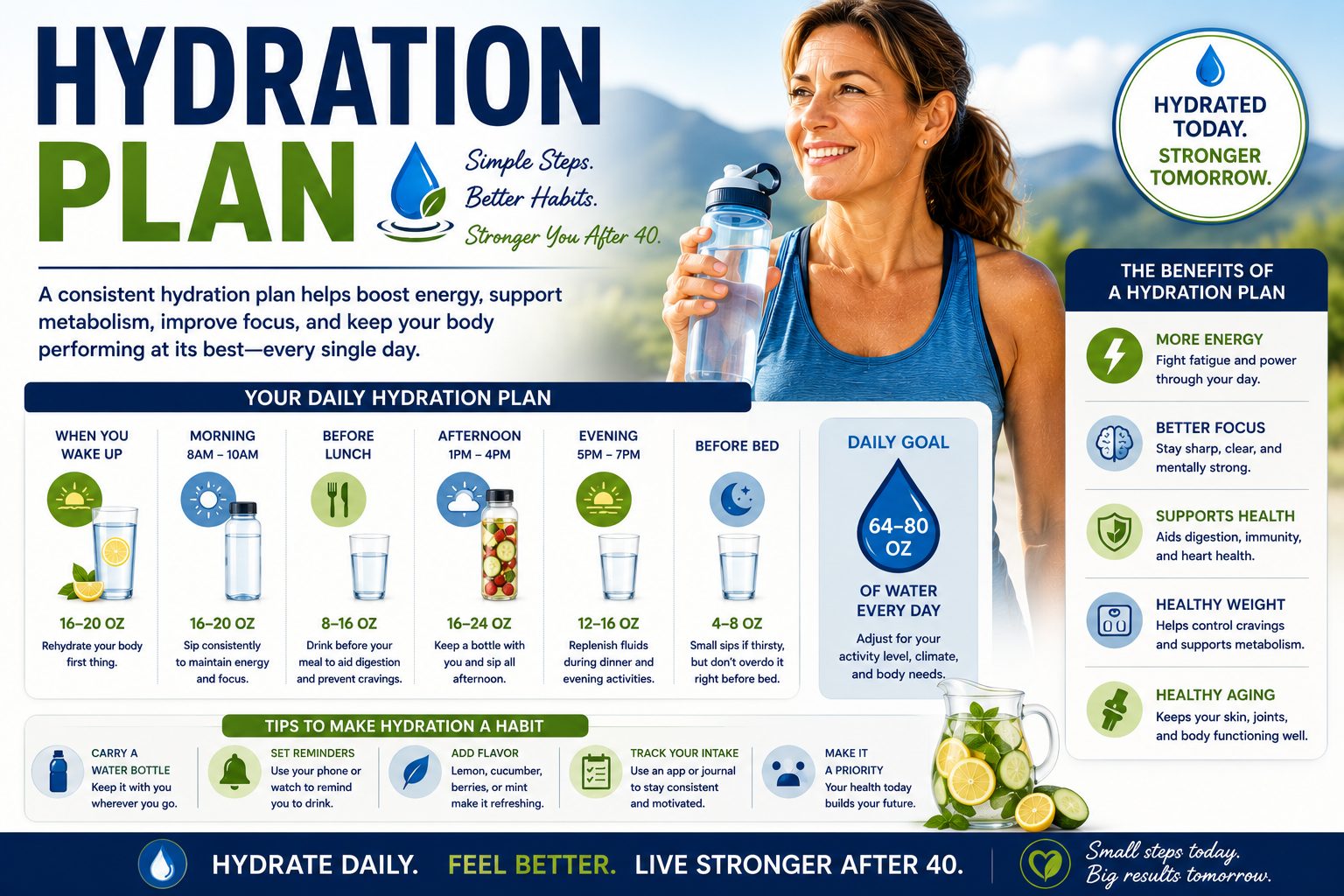
Daily Hydration Cues
| Daily Cue | Hydration Habit | Why It Helps |
|---|---|---|
| Wake Up | Drink one glass of water before coffee or breakfast. | Replaces fluids lost overnight and starts the day with a healthy habit. |
| Breakfast | Serve water, milk, or unsweetened tea with your meal. | Builds hydration into an existing routine. |
| Lunch | Drink water and include a water-rich fruit or vegetable. | Supports hydration while improving overall nutrition. |
| Afternoon Break | Refill your reusable water bottle. | Provides an easy reminder before the busiest part of the day. |
| Walking or Exercise | Drink water before and after activity. Carry a water bottle when appropriate. | Helps replace fluids lost through sweat. |
| Working Outdoors | Take scheduled water breaks, especially during hot weather. | Reduces the risk of dehydration during physical activity. |
| Dinner | Drink water with your evening meal. | Keeps hydration consistent throughout the day. |
| Before Bed | Drink enough to stay hydrated without consuming so much that it repeatedly interrupts sleep. | Helps maintain a balanced hydration routine. |
Heat and Outdoor Work
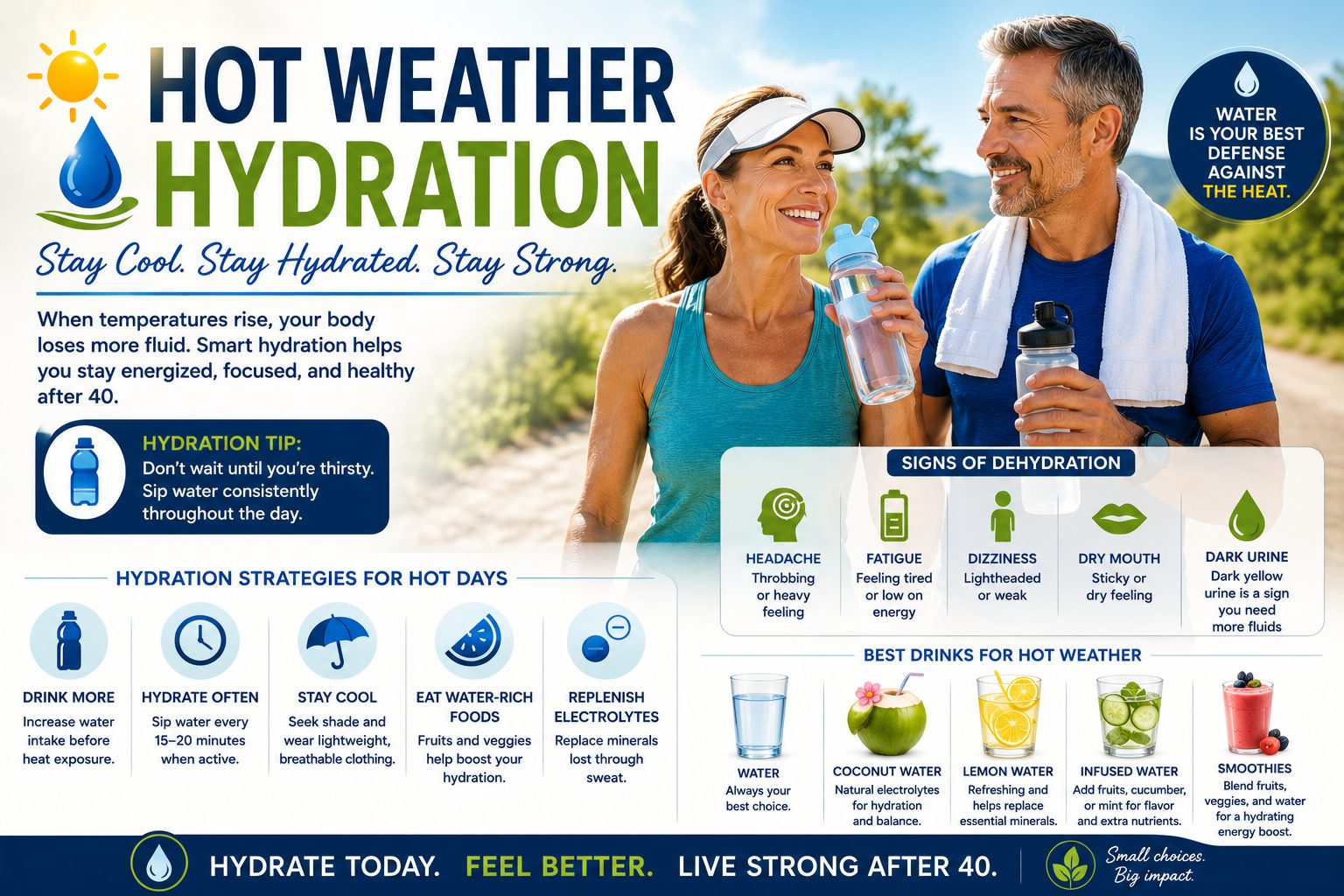
Working, walking, exercising, gardening, or completing yard projects in hot weather can increase fluid loss and raise the risk of heat-related illness. Heat, humidity, direct sunlight, physical effort, heavy clothing, and limited airflow can all make it harder for the body to stay cool.
Adults over 40 should not rely on thirst alone during prolonged outdoor activity. Plan ahead by having cool water available, taking regular breaks in a shaded or air-conditioned area, and reducing the intensity or duration of activity when conditions become unusually hot. Whenever possible, schedule strenuous tasks for the cooler morning or evening hours.
People who are new to outdoor work or returning after time away may need several days to gradually adjust to hot conditions. Start with shorter periods of activity, take more frequent breaks, and increase the workload gradually rather than attempting a full day of strenuous work immediately.
Practical Heat and Hydration Strategies
| Heat-Related Factor | Practical Response | Why It Helps |
|---|---|---|
| High Temperature or Humidity | Reduce the pace, shorten work periods, and take more frequent cooling breaks. | Heat and humidity make it more difficult for the body to release heat. |
| Direct Sunlight | Use shade whenever possible and wear lightweight, breathable clothing appropriate for the task. | Reducing direct heat exposure can help limit the rise in body temperature. |
| Physical Outdoor Work | Keep cool drinking water nearby and drink regularly rather than waiting until you become extremely thirsty. | Frequent access to fluids helps replace water lost through sweating. |
| Prolonged Heavy Sweating | Continue replacing fluids and consider whether food or an appropriate electrolyte-containing drink is needed. | Long periods of sweating can result in the loss of both water and electrolytes. |
| New or Returning Activity | Begin with shorter work periods and gradually increase exposure over several days. | The body needs time to adjust to working safely in hot conditions. |
| Limited Shade | Plan access to an air-conditioned vehicle, building, canopy, or another cooler recovery area. | Cooling breaks allow the body to release accumulated heat. |
| Working Alone | Tell someone where you will be, keep a phone nearby, and consider using a buddy system. | Heat-related symptoms can worsen quickly and may affect judgment. |
| Medications or Medical Conditions | Ask a qualified healthcare professional whether heat or heavy sweating requires special precautions. | Some medications and health conditions can affect temperature control or fluid balance. |
Water, Rest, and Shade
A simple outdoor safety plan should include three essentials: accessible drinking water, regular rest periods, and a shaded or cooled recovery area. Do not wait until you feel sick to take a break. The hotter the conditions and the harder the work, the more frequently you may need to slow down, drink, and cool off.
For short periods of ordinary activity, water is usually the most practical beverage. Extended strenuous work with heavy sweating may require additional planning for electrolytes and meals. Avoid assuming that more fluid is always better, because drinking excessive amounts in a short period can also be unsafe.
Warning Signs of Heat Exhaustion
- Heavy sweating
- Unusual weakness or fatigue
- Headache
- Dizziness or lightheadedness
- Nausea or vomiting
- Muscle cramps
- Fast heartbeat
- Irritability or difficulty concentrating
- Cool, pale, or clammy skin
Stop the activity, move to a cooler location, loosen unnecessary clothing, and begin cooling down if symptoms of heat exhaustion appear. Seek medical help when symptoms are severe, do not improve promptly, or continue to worsen.
Heat Stroke Is an Emergency
Confusion, fainting, seizures, loss of coordination, altered behavior, or a very high body temperature may indicate heat stroke. Call 911 immediately and begin rapid cooling while emergency help is on the way. Do not leave the affected person alone.
Put This Into Practice
Before your next outdoor activity, decide where your water and cooling area will be before you begin. Check the weather, place a filled water bottle or cooler within easy reach, and choose a clear cue for taking breaks, such as completing a section of work or hearing a recurring phone alarm.
Your minimum version might be: “Before I begin outdoor work, I will place water in the shade and choose where I will cool down.” This small preparation step is realistic even on a busy day and can make safer choices easier once work begins.
Review Without Judgment
At the end of the week, ask yourself:
- Did I check the temperature and humidity before outdoor activity?
- Was cool water easy to reach?
- Did I take breaks before I felt exhausted?
- Was shade or air conditioning available for recovery?
- Did I adjust the pace when conditions became hotter?
- Did I notice headaches, dizziness, unusual fatigue, or muscle cramps?
- What one change would make my next outdoor activity safer?
Staying hydrated during hot weather is only one part of heat safety. Water works best when combined with rest, shade, gradual heat adjustment, appropriate clothing, and a plan for recognizing and responding to heat-related symptoms.
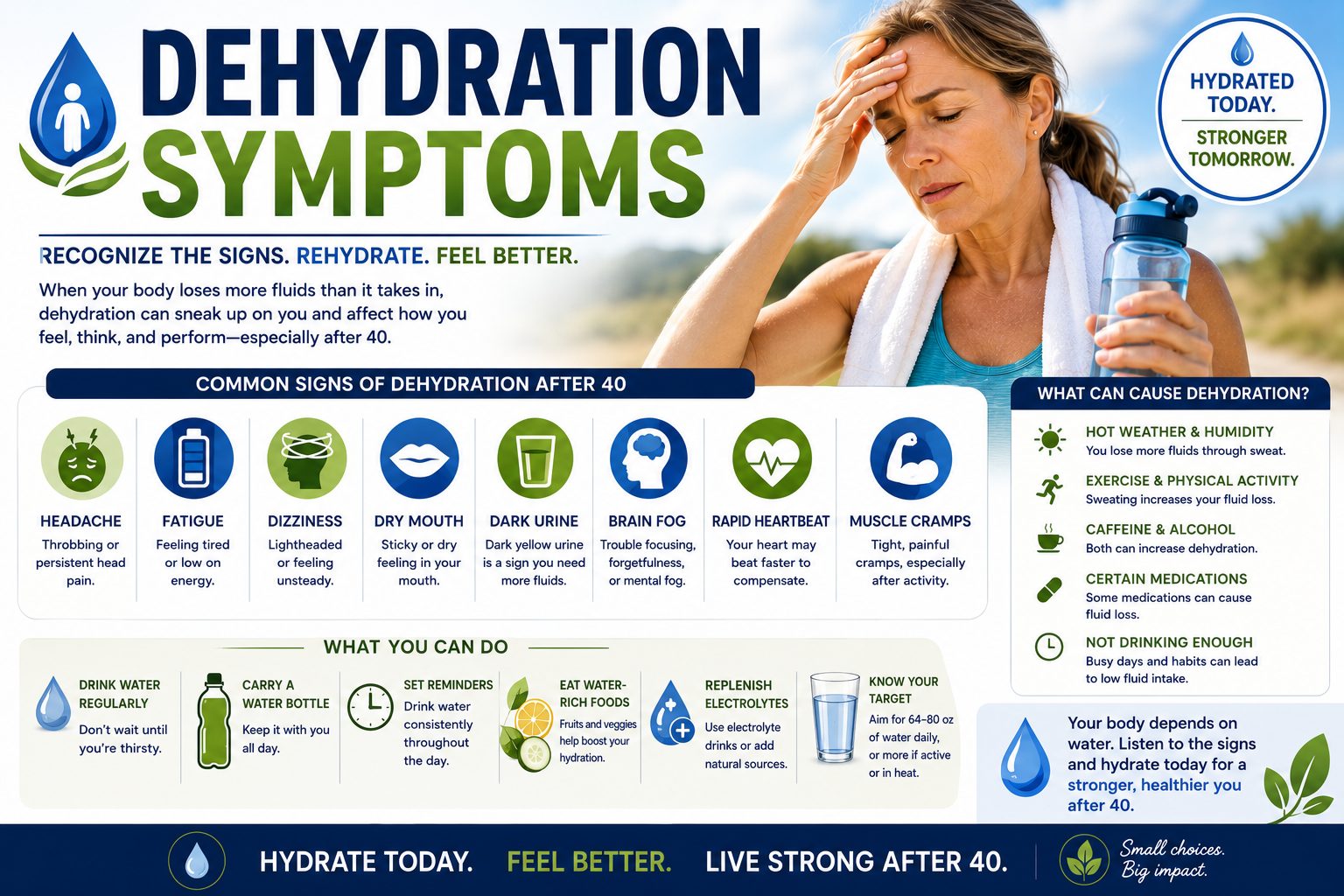
Common Hydration Mistakes
Many hydration problems aren’t caused by drinking too little water—they’re caused by habits that make it difficult to stay consistently hydrated. Adults over 40 often benefit more from avoiding common mistakes than from trying to reach a specific daily water goal. Building practical routines and paying attention to your body’s needs usually produces better long-term results than following rigid rules.
Hydration is also highly individual. Your activity level, weather, medications, medical conditions, and diet all influence how much fluid your body needs. Looking at several signs together instead of relying on one indicator provides a more balanced approach.
Common Hydration Mistakes and Better Alternatives
| Common Mistake | Better Approach |
|---|---|
| Waiting until you feel extremely thirsty | Drink fluids consistently throughout the day instead of waiting until you’re very thirsty. |
| Trying to drink all your water at once | Spread fluid intake across the day for better comfort and consistency. |
| Ignoring hot weather or heavy sweating | Increase fluids when exercising, working outdoors, or spending time in the heat. |
| Assuming only plain water counts | Include water-rich foods and appropriate beverages such as milk, unsweetened tea, soups, and fruits. |
| Replacing every drink with sugary beverages | Choose water most often and gradually reduce sugar-sweetened drinks. |
| Ignoring medication or medical advice | Follow individualized guidance if medications or health conditions affect your fluid intake. |
| Depending only on urine color | Consider thirst, activity level, weather, urine color, and how you feel together. |
| Drinking excessive amounts of water quickly | Drink steadily throughout the day instead of consuming very large amounts in a short period. |
Balanced Ways to Monitor Hydration
- Notice your level of thirst.
- Observe urine color as one helpful clue rather than the only measure.
- Pay attention to energy levels during daily activities.
- Increase fluids during exercise, hot weather, or illness.
- Include water-rich foods with meals.
- Follow medical guidance if you have kidney disease, heart failure, or other conditions affecting fluid balance.
When Individual Medical Advice Matters
Some people should not increase fluid intake without professional guidance. Kidney disease, heart failure, liver disease, and certain medications may require individualized fluid recommendations. If your healthcare professional has given you specific instructions about fluid intake, those recommendations should take priority over general hydration advice.
Put This Into Practice
Choose one hydration mistake that applies to your routine and replace it with one small improvement this week. For example, if you often forget to drink during busy mornings, place a filled water bottle where you’ll see it before leaving the house. If you regularly choose soda with lunch, replace one serving this week with water or another lower-sugar beverage.
Your minimum habit might be: “Whenever I sit down for a meal, I’ll drink a glass of water before taking my first bite.” Small habits that fit naturally into your routine are much easier to maintain than dramatic changes.
Review Without Judgment
At the end of the week, ask yourself:
- Which hydration mistake occurred most often?
- What situations made staying hydrated more difficult?
- Did I drink fluids consistently throughout the day?
- Did I adjust my hydration during exercise or hot weather?
- What one small change would improve next week?
Hydration after 40 is rarely about perfection. The goal is to recognize common mistakes, make practical adjustments, and develop sustainable hydration habits that support your health for years to come.
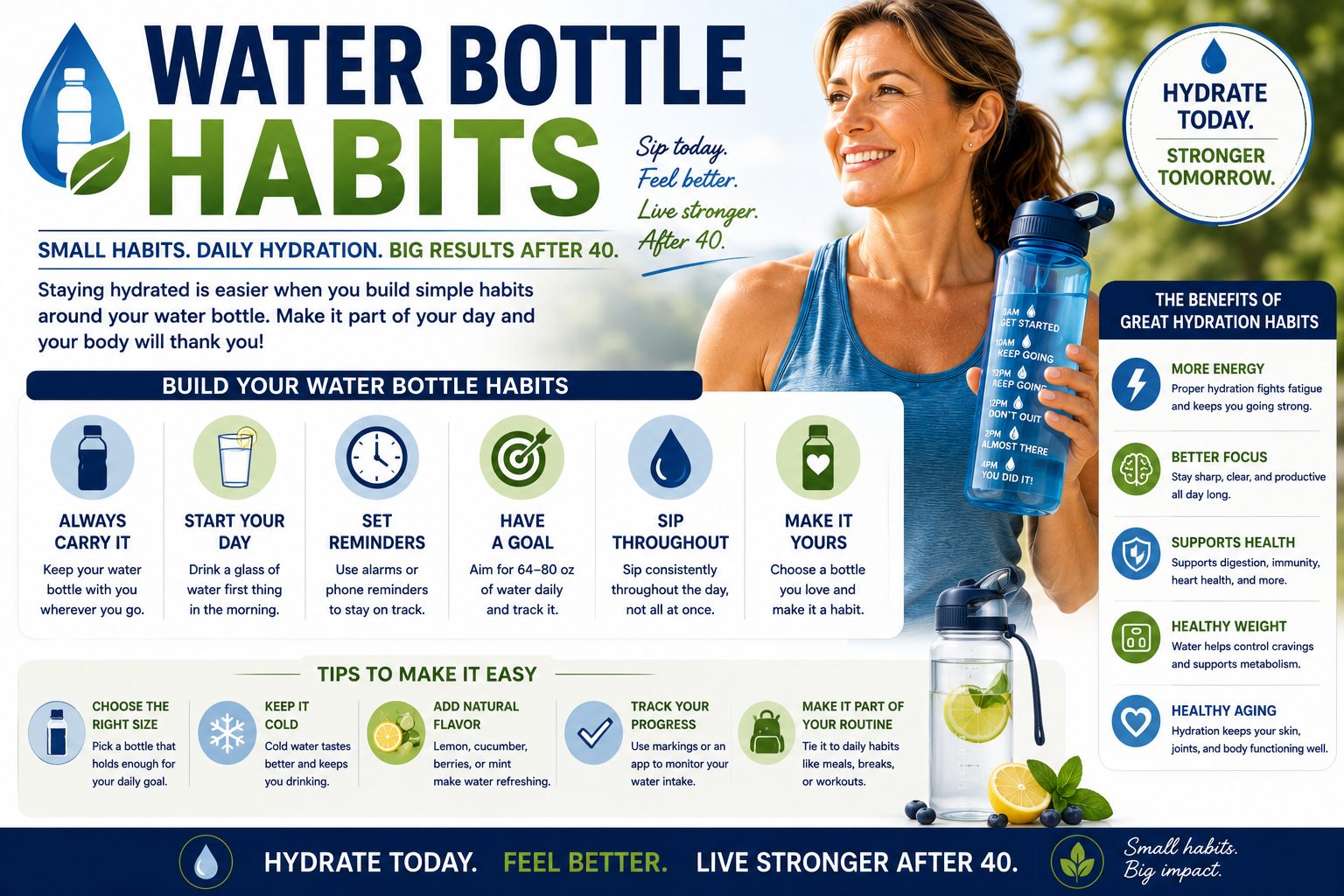
Make Water Easier to Drink
Many people know they should drink more water, but remembering to do it consistently can be challenging. The easiest way to improve hydration after age 40 is to make water convenient, enjoyable, and part of your normal daily routine. Small environmental changes often work better than relying on willpower alone.
If water is always nearby and easy to reach, you’re much more likely to drink it throughout the day. Keeping a reusable water bottle within sight, serving water with meals, and creating simple refill routines can turn hydration into an automatic habit instead of another item on your to-do list.
You don’t have to drink plain room-temperature water if you don’t enjoy it. Many people prefer cold water, warm water, sparkling water, or naturally flavored water with slices of lemon, lime, cucumber, berries, or mint. Finding a version you enjoy makes healthy hydration much easier to maintain.
Simple Ways to Drink More Water
| Strategy | How It Helps |
|---|---|
| Carry a reusable water bottle | Makes water available wherever you go. |
| Keep water visible | Seeing your water bottle provides a natural reminder to drink. |
| Drink water with every meal | Builds hydration into an existing daily habit. |
| Choose your preferred temperature | Cold, cool, room temperature, or warm water may all be easier to drink depending on your preference. |
| Add natural flavor | Lemon, lime, cucumber, berries, oranges, or mint can make water more enjoyable without adding much sugar. |
| Use a favorite cup or bottle | Many people drink more when they enjoy using their water container. |
| Refill at the same time each day | Creates a predictable hydration routine. |
| Keep water in multiple locations | Store water at your desk, in your vehicle, and at home to reduce barriers. |
Natural Ways to Add Flavor
- Lemon slices
- Lime wedges
- Cucumber slices
- Fresh strawberries
- Blueberries
- Orange slices
- Fresh mint leaves
- Sparkling water without added sugar
Make Healthy Hydration More Convenient
Convenience plays a major role in forming lasting habits. Fill your water bottle before leaving home, keep an extra bottle in your vehicle, place a glass of water beside your workspace, or keep chilled water in the refrigerator so it’s always ready to drink. The fewer steps required, the more likely you are to stay hydrated consistently.
Put This Into Practice
Choose one change that makes drinking water easier this week. For example, buy or refill a reusable water bottle, place water beside your desk, or decide to drink water before every meal. Start with one simple action that feels easy enough to repeat every day.
Your minimum habit might be: “Whenever I finish a meal, I’ll refill my water bottle before leaving the table.” Small routines connected to existing habits are often the easiest to maintain over the long term.
Review Without Judgment
At the end of the week, ask yourself:
- Was water easy to reach throughout the day?
- Which type of water did I enjoy the most?
- Did keeping a bottle nearby help me drink more?
- Which hydration cue worked best?
- What one small change would make drinking water even easier next week?
Hydration after 40 becomes much simpler when water is convenient, enjoyable, and connected to routines you already follow. The goal isn’t to force yourself to drink more—it’s to create an environment where staying hydrated happens naturally.
Drink Comparison: Which Beverages Help With Hydration?
| Drink | Hydration Benefits | Things to Consider |
|---|---|---|
| Water | Excellent source of hydration with no calories or added sugar. | Usually the best everyday choice for most healthy adults. |
| Sparkling Water | Provides hydration similar to plain water. | Choose varieties without added sugar whenever possible. |
| Unsweetened Tea | Contributes to daily fluid intake and contains naturally occurring plant compounds. | Caffeine sensitivity varies from person to person. |
| Coffee | Can contribute to daily hydration for most healthy adults when consumed in moderation. | Large amounts may not be appropriate for everyone because caffeine tolerance differs. |
| Milk | Provides fluid along with protein, calcium, and several essential nutrients. | Choose the type that best fits your nutritional needs and preferences. |
| Plain Yogurt Smoothie | Provides fluid, protein, and nutrients when prepared with nutritious ingredients. | Watch for added sugars in commercially prepared smoothies. |
| Broth-Based Soups | Help increase fluid intake while providing nourishment. | Some canned soups may contain higher amounts of sodium. |
| Electrolyte Drinks | May be useful during prolonged exercise, heavy sweating, or extended outdoor work. | Many are unnecessary for everyday hydration and some contain added sugar. |
| 100% Fruit Juice | Contains water, vitamins, and minerals. | Because it naturally contains concentrated fruit sugars, moderate portions are generally recommended. |
| Sugar-Sweetened Soft Drinks | Provide fluid but also significant amounts of added sugar and calories. | Replacing these with water or lower-sugar beverages may support overall health. |
| Energy Drinks | Provide fluid but often contain caffeine and other stimulants. | Read labels carefully and consider whether they fit your personal health needs. |
| Alcoholic Beverages | Should not be relied on for hydration. | Alcohol can contribute to fluid loss, so drinking water alongside alcoholic beverages is often helpful. |
Bottom Line
For most healthy adults over 40, water should be the primary beverage for everyday hydration. Milk, unsweetened tea, coffee in moderation, broth-based soups, and water-rich foods also contribute to daily fluid intake. Sugar-sweetened beverages and alcohol are generally less effective choices for supporting healthy hydration when consumed regularly.
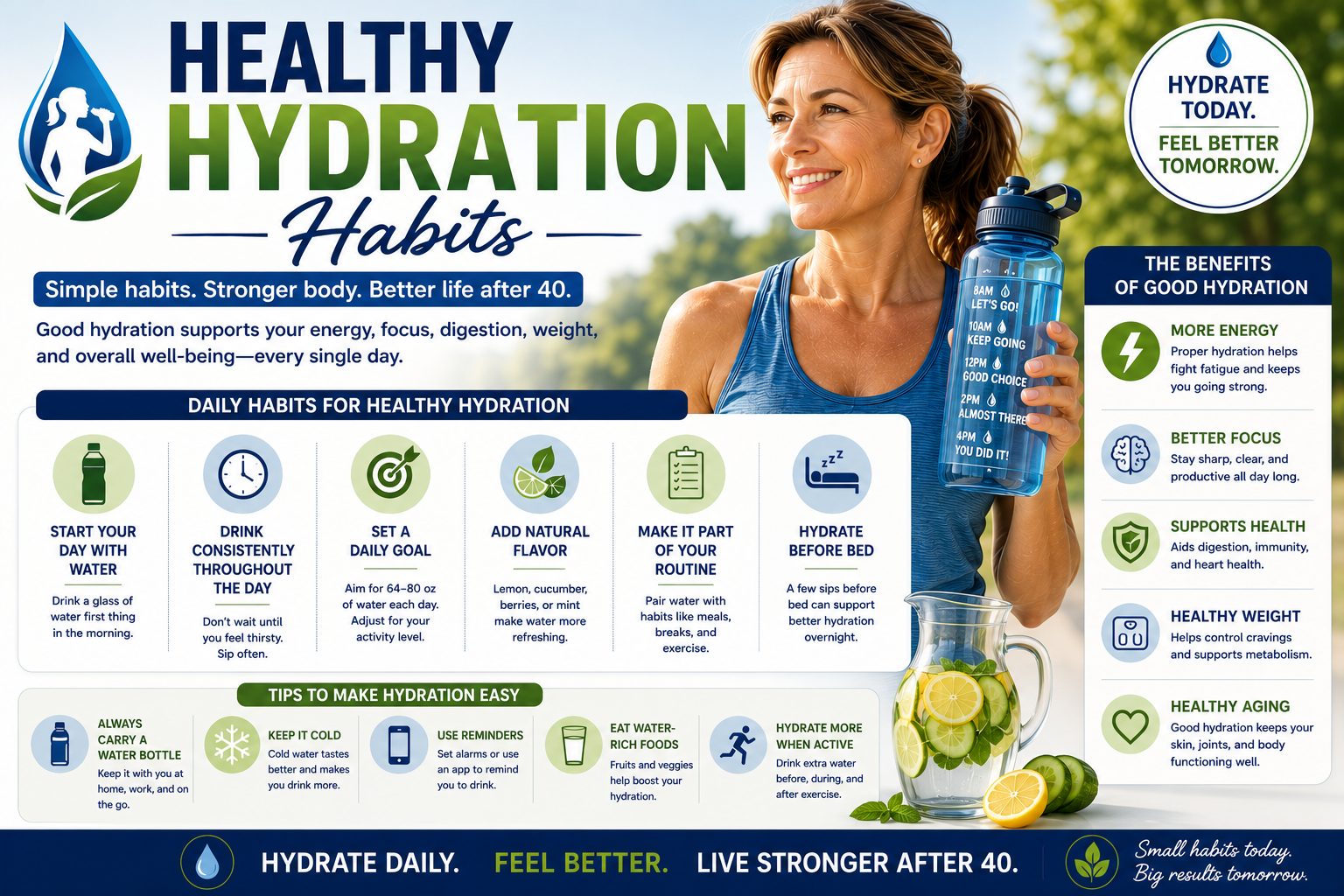
A 7-Day Hydration Plan
Improving hydration doesn’t require dramatic changes overnight. The goal of this seven-day plan is to build one simple habit at a time until drinking enough fluids becomes part of your normal routine. Start where you are, make small improvements, and adjust the plan to fit your lifestyle.
Rather than focusing on a specific number of glasses each day, pay attention to consistency. Drinking water regularly throughout the day is usually easier to maintain than trying to consume large amounts all at once.
7-Day Hydration Challenge
| Day | Focus | Simple Action |
|---|---|---|
| Day 1 | Observe Your Routine | Notice when you naturally drink fluids without trying to change anything. |
| Day 2 | Morning Water | Drink a glass of water after waking up or with breakfast. |
| Day 3 | Water With Meals | Serve water with lunch and dinner. |
| Day 4 | Carry Water | Keep a reusable water bottle nearby at work, in your vehicle, or while walking. |
| Day 5 | Add Water-Rich Foods | Include fruit, vegetables, soup, or yogurt with one meal. |
| Day 6 | Adjust for Activity | Drink extra fluids before and after exercise or outdoor activities. |
| Day 7 | Create Your Long-Term Routine | Choose the hydration habits that worked best and continue using them next week. |
Simple Habits That Last
Successful hydration habits are usually attached to routines you already follow. Drinking water after brushing your teeth, before every meal, after exercise, or whenever you refill your coffee cup creates reliable reminders that require very little extra effort.
If you miss a day, simply restart with your next opportunity. Long-term consistency matters far more than completing every day perfectly.
Weekly Hydration Checklist
- □ Drank water throughout the day instead of all at once.
- □ Included water with most meals.
- □ Ate at least one water-rich food each day.
- □ Carried a reusable water bottle.
- □ Increased fluids during exercise or hot weather.
- □ Limited at least one sugary drink.
- □ Paid attention to thirst and other hydration cues.
Put This Into Practice
Choose just one hydration habit from the seven-day plan and repeat it every day this week. Once it becomes automatic, add another small habit. Building one lasting routine at a time is usually more successful than trying to change everything at once.
Your minimum habit might be: “Every morning after I wake up, I’ll drink one glass of water before starting my day.” Even on busy days, this small action is realistic and easy to repeat.
Review Without Judgment
At the end of the week, ask yourself:
- Which hydration habit felt easiest?
- When did I naturally remember to drink water?
- Which situations made hydration more difficult?
- Did I drink more during exercise or hot weather?
- What one habit will I continue next week?
Hydration after 40 is built through small, repeatable habits rather than perfect daily performance. Every healthy routine you repeat consistently becomes another step toward better energy, improved well-being, and long-term healthy aging.
Medical Conditions and Fluid Limits
Heart, kidney, liver, endocrine conditions, and some medicines may require personalized fluid advice.
Put this into practice: Read this section with your actual week in mind. Identify the smallest action related to medical conditions and fluid limits that could be repeated on a busy day. Write the action in plain language, choose a cue, and decide what the minimum version will be. A plan that only works on an ideal day is not yet a practical plan.
Review without judgment: At the end of the week, ask what helped, what created friction, and what needs to be changed. Avoid dividing the week into success or failure. The purpose of review is to collect information. This approach is especially useful for hydration after 40 because progress depends on patterns that develop over time.
Warning Signs That Need Prompt Attention
| Situation | Recommended Action | Why It Matters |
|---|---|---|
| Confusion, fainting, seizure, or loss of consciousness | Call 911 or your local emergency services immediately. | These may be signs of heat stroke or another serious medical emergency. |
| Symptoms of Heat Stroke Very hot body, confusion, altered behavior, collapse, or seizures | Begin cooling the person immediately while emergency medical help is on the way. | Heat stroke is a life-threatening emergency that requires immediate treatment. |
| Persistent Vomiting or Inability to Keep Fluids Down | Contact a healthcare professional promptly. | Continued fluid loss increases the risk of dehydration and other complications. |
| Severe Weakness or Dizziness That Doesn’t Improve | Stop the activity, rest, hydrate if appropriate, and seek medical evaluation. | Persistent symptoms may indicate dehydration, heat illness, or another medical condition. |
| Signs of Heat Exhaustion Heavy sweating, headache, nausea, muscle cramps, dizziness, or unusual fatigue | Move to a cool location, drink fluids if appropriate, and monitor symptoms. Seek medical care if symptoms worsen or fail to improve. | Early treatment may help prevent progression to heat stroke. |
| Kidney Disease, Heart Failure, or Prescribed Fluid Restriction | Follow your healthcare professional’s individualized fluid plan. | General hydration advice may not be appropriate for everyone. |
| Exercise or Outdoor Work in Extreme Heat | Increase water breaks, seek shade, reduce activity, and stop if warning signs develop. | Heat and heavy sweating increase the risk of dehydration and heat-related illness. |
Remember: Most healthy adults can prevent dehydration by drinking fluids regularly, increasing water intake during exercise and hot weather, and responding to early warning signs. If symptoms are severe, rapidly worsening, or involve confusion, fainting, or loss of consciousness, seek emergency medical care immediately.
Weekly Hydration Checklist
- ☐ Drank water consistently throughout the day instead of waiting until I was very thirsty.
- ☐ Included water with most meals and snacks.
- ☐ Carried a reusable water bottle when away from home.
- ☐ Ate at least one water-rich food such as fruit, vegetables, soup, or yogurt each day.
- ☐ Increased my fluid intake during exercise, outdoor work, or hot weather.
- ☐ Replaced at least one sugar-sweetened beverage with water or another lower-sugar drink.
- ☐ Paid attention to thirst, urine color, energy levels, and how I felt instead of focusing on only one hydration measure.
- ☐ Used one consistent hydration cue, such as drinking water after waking up, before meals, or after exercise.
- ☐ Reviewed what worked well and identified one small improvement for next week.
- ☐ Followed my healthcare professional’s advice if I have a medical condition or prescribed fluid restrictions.
Remember: Healthy hydration after 40 is built through small, repeatable habits. You don’t need a perfect week to make progress—consistent improvements over time are what support long-term health and healthy aging.
Common Hydration Mistakes to Avoid
- ☐ Waiting until you’re extremely thirsty before drinking fluids.
- ☐ Trying to drink all of your daily water in one sitting instead of spreading it throughout the day.
- ☐ Ignoring increased fluid needs during exercise, outdoor work, hot weather, or illness.
- ☐ Assuming only plain water contributes to hydration while overlooking water-rich foods and appropriate beverages.
- ☐ Drinking sugar-sweetened beverages more often than water.
- ☐ Forgetting to carry a reusable water bottle when away from home.
- ☐ Depending only on urine color instead of also paying attention to thirst, activity level, weather, and how you feel.
- ☐ Drinking excessive amounts of water in a short period of time.
- ☐ Ignoring your healthcare professional’s advice if you have kidney disease, heart failure, diabetes, or another condition affecting fluid balance.
- ☐ Trying to build several new hydration habits at once instead of focusing on one small, repeatable improvement.
Remember: The healthiest hydration routine is one you can follow consistently. Small improvements repeated every day are usually far more effective than extreme changes that are difficult to maintain.
Illustrative Reader Perspective
“I stopped thinking about hydration after 40 as something I had to do perfectly. Instead, I focused on one small habit at a time—keeping a water bottle nearby, drinking water with meals, and paying attention to my routine instead of chasing a specific number. Reviewing my week helped me see what worked, adjust what didn’t, and make hydration feel like a normal part of my day.”
This example is provided for illustration only. Individual experiences will vary, and it should not be interpreted as a guarantee of results or as medical advice.
Frequently Asked Questions About Hydration After 40
How much water should I drink after age 40?
There isn’t one amount that’s right for everyone. Your fluid needs depend on your body size, activity level, climate, diet, medications, and overall health. Drinking fluids consistently throughout the day and adjusting for exercise, hot weather, or illness is usually more helpful than focusing on one specific number.
Is thirst a reliable sign that I need water?
Thirst is an important signal, but it may not always be the earliest sign that you need fluids. Many adults over 40 find it helpful to combine thirst with regular hydration habits such as drinking water with meals and after exercise.
Can coffee and tea count toward hydration?
Yes. For most healthy adults, coffee and unsweetened tea contribute to daily fluid intake. Individual caffeine tolerance varies, so choose beverages that fit your personal health needs and preferences.
Do fruits and vegetables help with hydration?
Yes. Water-rich foods such as watermelon, oranges, strawberries, cucumbers, tomatoes, lettuce, celery, and soups all contribute to your daily fluid intake while providing important nutrients.
How can I drink more water if I forget?
Connect drinking water to habits you already have. Drink water after waking up, with every meal, after exercise, or whenever you refill your coffee cup. Keeping a reusable water bottle nearby also makes healthy hydration easier.
Are electrolyte drinks necessary?
For most everyday activities, water is enough. During prolonged exercise, heavy sweating, or extended outdoor work in hot weather, electrolyte-containing beverages may be appropriate for some people. Individual needs vary.
What are the early signs of dehydration?
Common signs include thirst, dry mouth, dark yellow urine, headache, fatigue, dizziness, reduced concentration, and decreased exercise performance. Persistent or severe symptoms should be evaluated by a healthcare professional.
Can you drink too much water?
Yes. Although uncommon, drinking excessive amounts of water in a short period can be harmful. A balanced approach that matches your activity level, weather, and personal health needs is generally the safest strategy.
Does hot weather change my hydration needs?
Yes. Heat and humidity increase fluid loss through sweating. During hot weather, outdoor work, or exercise, many people benefit from drinking more fluids and taking regular cooling breaks.
Should I replace soda with water?
Gradually replacing sugar-sweetened beverages with water or other lower-sugar drinks can reduce added sugar and calories while supporting healthy hydration. Small changes are often easier to maintain than dramatic changes.
Is sparkling water as hydrating as still water?
Yes. Plain sparkling water contributes to hydration similarly to still water. Choose varieties without added sugar whenever possible.
What if I have kidney disease or heart failure?
People with kidney disease, heart failure, liver disease, or prescribed fluid restrictions should follow their healthcare professional’s individualized guidance rather than general hydration recommendations.
Can hydration improve energy?
Proper hydration supports normal body function, and mild dehydration can contribute to fatigue and reduced physical performance. Staying consistently hydrated may help you feel your best throughout the day.
What is the easiest way to build a hydration habit?
Start with one simple routine, such as drinking a glass of water after waking up or with every meal. Once that habit becomes automatic, add another small change. Consistency is more important than perfection.
What is the most important thing to remember about hydration after 40?
There is no perfect amount of water that works for everyone. Focus on drinking fluids consistently, eating water-rich foods, adjusting your intake for activity and weather, and creating hydration habits that fit naturally into your daily routine.
Hydration After 40 Action Plan
Building better hydration habits doesn’t require dramatic changes. The goal is to make one small improvement at a time until healthy hydration becomes part of your normal routine. Use the following five-step process to create a plan that works even on busy days.
Step 1 — Observe Your Current Routine
For the next several days, simply notice your current hydration habits without trying to change them. Pay attention to when you naturally drink water, when you forget, what beverages you choose most often, and whether exercise, hot weather, or a busy schedule affects your fluid intake. The goal is to identify patterns, not judge your progress.
Step 2 — Choose One Small Hydration Habit
Select one action that is simple, specific, and easy to repeat. Examples include:
- Drink a glass of water after waking up.
- Serve water with every meal.
- Carry a reusable water bottle during the day.
- Replace one sugar-sweetened beverage with water.
- Eat one water-rich fruit or vegetable every day.
Choose only one habit to begin with. Small, repeatable actions are more likely to become lasting routines.
Step 3 — Prepare Your Environment
Make healthy choices easier before your day begins. Fill your water bottle the night before, keep water within easy reach, refrigerate cold drinking water if you prefer it chilled, or prepare sliced fruit to naturally flavor your water. Reducing obstacles decreases the amount of motivation required to stay hydrated.
Step 4 — Practice Consistently
Repeat your new hydration habit every day for one full week before adding another change. If you have a busy or stressful day, complete the smallest version of the habit instead of skipping it entirely. For example, if your goal is carrying a water bottle everywhere, your minimum version might simply be drinking one glass of water with breakfast.
Step 5 — Review and Adjust
At the end of the week, ask yourself:
- Which hydration habit felt easiest?
- When did I naturally remember to drink water?
- What made hydration more difficult?
- Did I drink more during exercise or hot weather?
- What one improvement will I continue next week?
Keep what worked, adjust what didn’t, and continue building your routine one habit at a time. Progress doesn’t require perfection—it requires consistency.
Remember
Healthy hydration after 40 is rarely about reaching a perfect number of glasses each day. It is about developing practical routines that fit your lifestyle, adjusting your fluid intake when your needs change, and making hydration an automatic part of your everyday life. Small improvements practiced consistently often produce the greatest long-term benefits for energy, physical activity, and healthy aging.
Hydration After 40 Action Plan
Building better hydration habits doesn’t require a complete lifestyle overhaul. The goal is to make one small improvement at a time until staying hydrated becomes a natural part of your daily routine. Use this five-step action plan to create habits you can maintain for the long term.
Step 1 — Observe:
For several days, pay attention to your current hydration habits. Notice when you naturally drink water, when you forget, which beverages you choose most often, and whether exercise, hot weather, work, or a busy schedule affects your fluid intake. Record only enough information to recognize patterns and identify opportunities for improvement.
Step 2 — Select:
Choose one small hydration habit that is specific and realistic. Examples include drinking a glass of water after waking up, serving water with every meal, carrying a reusable water bottle, replacing one sugary drink each day, or eating one water-rich fruit or vegetable. Focus on one habit rather than trying to change everything at once.
Step 3 — Prepare:
Set yourself up for success before your day begins. Fill your water bottle the night before, keep water within easy reach, chill water if you prefer it cold, or prepare fruit to naturally flavor your water. Reducing obstacles makes healthy hydration easier and less dependent on motivation.
Step 4 — Practice:
Repeat your new hydration habit every day for one full week before adding another change. On busy days, complete the smallest version of the habit instead of skipping it. Consistency is more important than perfection.
Step 5 — Review:
At the end of the week, review what worked well, what made hydration more difficult, and what one improvement you want to continue next week. Keep the habits that fit your lifestyle and adjust the ones that don’t.
This simple action-plan cycle can be repeated as often as needed. Healthy hydration after 40 is built through small daily routines, practical adjustments, and consistent practice—not through short-term motivation or dramatic changes. Every small improvement becomes another step toward better energy, healthier aging, and long-term well-being.
Medical Disclaimer
Healthy Reset Plan provides general educational information and is not a substitute for professional medical advice, diagnosis, or treatment.
The information on this website is designed to help adults over 40 build healthier habits through practical, evidence-informed guidance. It should not be used to diagnose, treat, cure, or prevent any medical condition, and it should not replace personalized advice from your physician or another qualified healthcare professional.
Speak with a qualified healthcare professional before making significant changes to your diet, hydration, physical activity, sleep habits, or weight-loss plan if you have a medical condition, take prescription medications, are pregnant or breastfeeding, have mobility limitations, have a history of disordered eating, or experience persistent or concerning symptoms.
Seek immediate medical attention or call your local emergency services if you experience severe symptoms such as chest pain, difficulty breathing, confusion, fainting, seizures, signs of heat stroke, or any other medical emergency.
Every person’s health needs are different. Healthy Reset Plan encourages readers to use the information provided as a starting point for healthy lifestyle discussions with their healthcare team and to make decisions based on their individual medical history and professional guidance.
Ready to Build Your Healthy Reset?
Begin with simple actions and create a routine that fits your life.
Final Thoughts
Healthy hydration after 40 isn’t about chasing a perfect number of glasses each day. It’s about building simple, practical habits that fit naturally into your lifestyle. Drinking water consistently, choosing water-rich foods, adjusting your fluid intake during exercise or hot weather, and making hydration part of your daily routine can all support your overall health and well-being.
Remember that lasting change happens through small, repeatable actions. Every glass of water, every healthier drink choice, and every hydration habit you build is another step toward improving your energy, supporting healthy aging, and creating a lifestyle you can maintain for years to come.
Use this guide as a starting point, continue making gradual improvements, and focus on consistency rather than perfection. Healthy Reset Plan is designed to help you build sustainable habits—one practical step at a time.
Healthy Reset Plan
Simple Steps. Better Health. One Day at a Time.